Rebranded Resources

This week, we were posed with a very interesting proposition to explore the dynamic between social media, marketing, and environmental outcomes. When asked the question:

“Can environmental outcomes be effectively achieved through a clever social media campaign, social innovation or marketing approach?”

My immediate response was yes they can. In fact, it was more along the lines of well duh, obviously. But upon further reflection, the thought of whether myself at the start of this unit would have been reached the same conclusion as the current version of me came up. I know a lot more now than I did at the start of the unit in that I now realize how large a role public opinion could have on something like wastewater treatment (I had no idea people were so opposed to drinking treated wastewater). And then I realized, in reality, the answer is not so obvious and straightforward as that. After all, how many people would really say that the key to stopping pollution would be a well-placed facebook ad or a witty marketing campaign? Not a lot, right? And yet, now I believe that whilst it may not be THE key to achieving environmental outcomes, it is certainly the FIRST key in a chain of many that unlock the path to environmental sustainability.

This led me to re-evaluate my answer and instead I came up with this reformed version. Environmental outcomes can be achieved but not solely through these platforms. Instead what these methods do is drive and build the momentum that can lead to the desired outcomes and changes.

To explore this further, we must first evaluate the purpose behind marketing and social media campaigns. The primary goal of these public displays is to shift public opinion or understanding. And while public opinion is a powerful and sometimes underestimated driving force, it is still effectively a tool that requires proper handling and direction to achieve meaningful results. I go through an example exploring this idea in this week’s vlog so be sure to check that out below.

So how does one effectively alter public opinion to push environmental agendas? Well, I watched this really interesting TED talk which I think does a really good job explaining how. The talk essentially appeals to the concept of “framing” as a means to change people’s perception. This is a concept we have discussed previously whereby environmental engineers often appeal to companies to be more environmentally friendly by pitching the idea in a way that highlights the benefits for the company. This is also a concept I have alluded to in the past with my previous blogs. Most notably in regards to this UN report and more specifically in regards to resource recovery.  The report specifically states:

Awareness raising and education are the main tools to overcome social, cultural and consumer barriers and to significantly contribute to building trust among consumers and changing public perception about wastewater use. Such awareness campaigns need to be tailored to consumers with different cultural and religious backgrounds.

But not only does the environmental agenda being pushed have to be framed in the right way, it also has to be pushed to the right people. While the general public are still major stakeholders that require appealing to, I believe that more attention is warranted towards policymakers as once momentum has built, it lies on the shoulders of policy and bureaucracy to lead forth next stage. To finish this week’s blog, There is a quote by the philosopher Ivan Illich which stuck with me this week throughout writing this blog.

Neither revolution nor reformation can ultimately change a society, rather you must tell a new powerful tale, one so persuasive that it sweeps away the old myths and becomes the preferred story, one so inclusive that it gathers all the bits of our past and our present into a coherent whole, one that even shines some light into our future so that we can take the next step… If you want to change a society, then you have to tell an alternative story.

Wastewater Regulations (or lack thereof)

This week, I’ve decided to look into standards and regulations surrounding wastewater in general as opposed to resource recovery in wastewater; a step away from my usual blogs. This is because in this past week’s class, we had a closer look at the legislation and regulation controls used to govern the treatment of wastewater. It was during this session where I was surprised to learn that there is no set global wastewater treatment standard. For example, I learned that in Sweden, there is an extremely low tolerance for fluorine in their treated water whereas here in Australia, there isn’t even a procedure or system in place to detect the presence of fluorine in our treated wastewater. This in itself leads to some interesting questions. Do the Swedish have some sort of inherent weakness to fluorine? Or is it that Australians have a natural resistance to the destructive nature of dreaded fluorine? Wait, I thought fluorine was meant to clean your teeth? Rather than getting caught up in the chemical nature of fluorine and all its various impacts on human health, I decided to move onto the bigger picture. Why isn’t there a global standard for wastewater treatment?

The more I thought about it, the more shocked I became. There is no globally recognized wastewater treatment standard. While I am certainly no expert on the matter, my limited experience up to this point with international and global standards had led me to believe that there was a global standard for most anything I could think of. So why is it that for something as challenging and daunting as wastewater management, a process that treats arguably our most valuable and important resource does not yet have a globally recognized standard? I mean there’s an internationally recognized standard for classifying a random rock I may decide to pick up for crying out loud (I’m looking at you ISO 14688-1:2002).

I should clarify that there aren’t a lack of standards for the governance of wastewater. Most countries, especially more developed nations, have generally put in place some sort of regulatory framework or guideline dictating the treatment of wastewater. Even here in Australia, each state has its own take on wastewater treatment practices. My main concern is that these various frameworks do not share a general consensus as to the proper treatment of wastewater. Of course, the subject is extremely complicated and there likely does not exist a solution that satisfies each country/region/culture. But regardless, I believe at the very least there should be some basic standards set in place for countries to use as an initial platform if nothing else. For example, this could include defining some basic nomenclature for terms commonly used with wastewater or setting minimum standards for compliance before classifying any water as “treated”. After all, how can we even go about treating wastewater if we don’t have a globally or widely accepted definition of the word.

I did do some research into looking for some global standards and came across an international standard for drinking water by the World Health Organization, but this standard dates back to 1972 and is wholly outdated for the needs of our more modern society nor does it encompass the scope of knowledge we now possess. The closest thing I could find to an international guideline was this wastewater management analytical brief conducted by the United Nations. It should be noted that this is an analytical brief on wastewater management practices, it is not a regulatory framework, code of practice or guideline and yet it was the closest thing I could find. It is however very interesting and does provide some very good insights for good wastewater management practices.

In a previous blog, I mentioned how around 80% of wastewater produced around the world did not receive treatment of any kind before being discharged, yet this statistic should not be surprising given that many places lack basic effective wastewater treatment systems. Adding to this dire situation is that even when policies and frameworks are put in place, without effective monitoring and enforcement, such methods to treat wastewater could still prove ineffective. Even while researching the wastewater standards and regulations within Australia, I often came across documents labeled as guidelines. While guidelines do have their place, isn’t it more important that they are implemented as laws, policies and regulations?

To finish off, while reading from the United Nations Environmental Programme document “Clearing the waters”, I came across this passage which really summed up my findings for this weeks:

“There is a water crisis, and there is an increasing understanding that it is a crisis of governance rather than one of physical scarcity”.the lack of good governance, including ineffective policies, enforcement, and institutions; corruption; and the lack of appropriate infrastructure, along with a shortage of new investments in building human capacity, all contribute to ongoing water quality problems. Weak institutions, inadequate water quality policies and regulations, and limited enforcement capacity underlie many water quality problems worldwide”

With this weeks vlogs, I explore some of the deeper barriers to creating a global standard for wastewater as well as some other challenges faced by wastewater managment:


The future of waste water treatment

Following last weeks blog about resource recovery, I took a deeper look into the current wastewater management process and current efforts taken to incorporate resource recovery into the existing infrastructure.  Taking a systemic approach, I looked into each step of the treatment process and researched what were the limitations and what future avenues of development were possible. While we are long past the days where the lack of a wastewater management system and open sewage caused a cholera outbreak in Melbourne, we are still far from optimizing it.

While the shift in attitude to wastewater as a means of resource recovery is definitely a step in the right direction, there are still many challenges ahead. These issues range from policy issues to technological advancements to the profitability and cost of implementing new or updated systems.  The change in perspective has been readily been taken on by the water corporation. The efforts taken by water corporation can be seen with the recent upgrades to the treatment facilities at the Beenyup advanced water treatment plant. The upgrades were made both to treat a larger amount of wastewater and to help purify it to the extent where it is drinkable echoing the changing role upheld by these facilities. But my question is, what about other resources that could be recovered and what are the challenges to doing so?

Image result for beenyup water treatment plant

Photo of Beenyup Water treatment plant, taken from here.

Perhaps before even considering how to improve our current large-scale systems of wastewater treatment to better allow them to recover valuable resources, it might be worthwhile to consider how we could do so without even the use of the sewage system. What I mean by this is that there are already a myriad of options that allow for the reuse of wastewater. This includes using greywater for watering plants or implementing small internal systems within our homes capable of turning human waste from our toilets into nutrient-rich compost which can be used in our gardens. While this avenue of waste management definitely holds potential, the pursuit of this idea leads to further questions like how do we regulate self-imposed wastewater management? Or to what extent should these smaller more decentralized treatment methods be put in place?  I believe that many of these questions remain unanswered and a dialogue needs to be established to effectively explore the ideas (perhaps in a future blog or vlog).

But moving on from wastewater management within a small-scale contained environment, what typically happens to wastewater is that it enters the waterworks or sewage system. While I investigated potential strategies to employ resource recovery into our current networks of pipes, I quickly came to the conclusion that this was both very difficult to do and also not economically feasible. Simply said, the concentration levels of resources that could be recovered are not high enough in such a large network.

After travelling through the sewage systems, wastewater eventually reaches treatment plants. This is where the concentrations of constituents begin to become sufficiently high to the point where there is some real economic value in extracting them. It is at this point where the first stage of the treatment process truly begins. This first process is called the headworks in which large solid masses (typically inorganic) and debris are removed from the wastewater via a screening process. While the captured trash is usually collected and sent to a landfill, I believe it may be possible to incorporate resource recovery into this process in the future. This could come in the form of the collection of soil particles such as sand, silts and gravels that could be treated and reused. Or perhaps instead of dumping all the trash into a landfill, it may be possible to somehow incorporate other waste (such as from bins or industrial waste) into the water treatment plants to extract valuable resources.

Following the removal of inorganic matter and grit, wastewater typically undergoes primary treatment. In this treatment process, the main objective is to remove organic matter from the wastewater. Even smaller particles and rubbish are removed via sedimentation or screens and the wastewater enters primary clarifiers. It is here that most of the settleable solids settle to the bottom of the clarifying tanks and are removed.  A large number of soluble solids are also removed in this process. Oils and grease also float to the top of the tanks and are skimmed off. These oils again present a great opportunity for resource recovery. In fact, funding was announced just recently to treat these oils and biosolids from wastewater treatment plants at an oil processing plant to upgrade it to crude oil and potentially diesel oil.  Biosolids are also a great potential source of nutrients with evidence of improved crop yields over traditional fertilizers. However, The issue of other more harmful byproducts that may be within the biosolids warrants further investigation. Typically nutrient recovery is not utilized at this stage and is instead only utilized in the secondary treatment phase.

Image result for primary clarifiers

Image depicting clarifier, for more on them check out the link here.

In this phase, more biological means are employed to treat wastewater. Oxygen is pumped into the wastewater. In doing so, an idealised environment is created for bacteria and algae to feed on the remaining solids via aerobic digestion in the water to extract nutrients (phosphates and nitrates which can be very useful for fertilization but also deadly to sea life) and consume other organic solids. Secondary clarifiers are then used to extract the majority of the remaining solids as the final step to removing biomatter. After this, the wastewater is quite clean and further treatment is only needed for reuse purposed. I elaborate further on these disinfection methods in my vlog linked below. Most of the main water treatment facilities in WA are currently designed to the advanced secondary stage and I was honestly quite surprised at how much resource recovery had already been implemented especially in the secondary stage.

But there was a final stage where the next step in the recovery journey could be taken. This is the employment of use of anaerobic digesters in which biosolids are left to sit in an oxygen deprived environment filled with bacteria. These bacteria produce pathogens which decompose the biosolids to produce methane and nutrient-rich digestate. Both these products are valuable resources and I look forward to how this process can be incorporated into our existing infrastructure. Perhaps one day, enough gas might even be produced to fuel the electric needs of the whole treatment facility. In conclusion, while the water treatment process seems to be ok at the moment. there are still leaps and bounds to be made to fully realize the potential of resource recovery.Biogas

Example of anaerobic digestor, taken from here

Link to my vlog can be found here :

Wasted Opportunities: Brown is the new gold.

If someone walked up to you and told you that you were dumping a valuable resource that could potentially be part of a multi-million or even billion-dollar industry down the drain every day, you probably wouldn’t believe them. Especially if they told you it was the very the very water and waste that was being discharged into our drainage systems to be processed at some water treatment plant. And if they were to give you a sample of sewage from the local treatment plant or that pinkish hued water that Anas prepared as an example of this supposed resource, your disbelief might even turn to outrage. You might even go so far as to dump it on them!

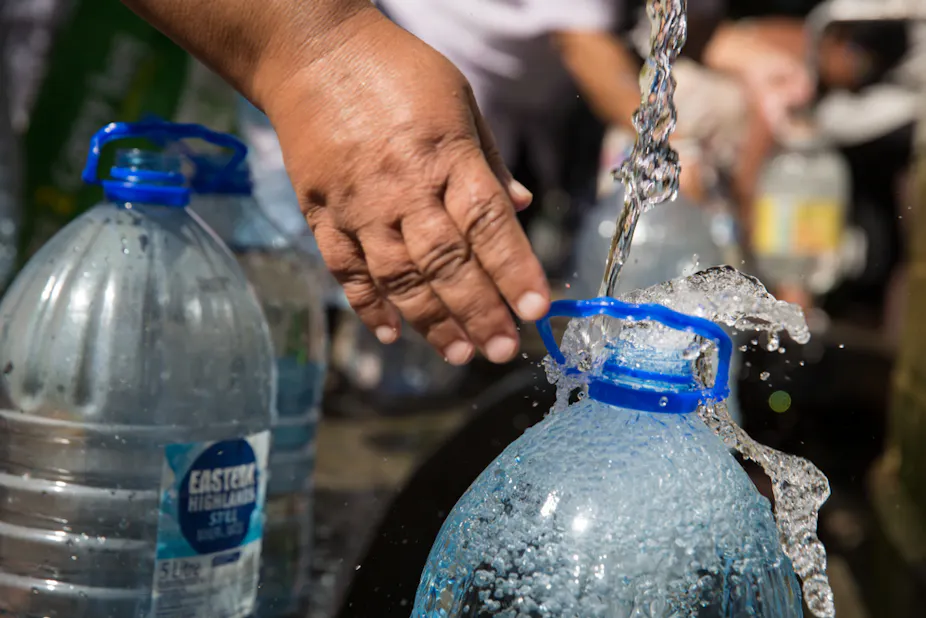
Up until about a week ago, I probably wouldn’t blame you and would’ve agreed with you. After all, it’s just garbage, right? It’s in the very name. “Waste” water. But following last weeks class on the constituents of wastewater, there was a memory nagging at the back of my head that I just couldn’t shake. You see, I grew up in South Africa and lived there for most of my life. And even to this day, one of my defining memories of what it was like living there was the constant outages of services. Be it electricity, or cell reception, or water, a few weeks couldn’t pass by without some essential service being cut off. I distinctly remember flushing the toilet and thinking that the sound of the tank refilling was a bit softer than usual. Then as I would turn on the tap to wash my hands, I would hear a loud deep groaning sound as if the pipes were giving a final push before dying. It was at this stage where I would yell out at the top of my lungs: “THERE’S ALMOST NO WATER LEFT. QUICK GRAB THE BUCKETS” and everyone would drop what they were doing and rush to fill the bathtub, buckets, pots and pans with whatever water was left in the pipes before the flow completely stopped. Sometimes, this water would be clear but often times it would turn a murky green/brown and could only be used as grey water (i.e. used for flushing toilets). It was constant reminders like these where I would realise how valuable and scarce a resource like clean water could be.

Image result for water outages collecting water

But since moving to Australia, I have forgotten this fact. Water became one of the many things I have since just taken for granted. It wasn’t till last weeks class where I’ve begun to realize again how valuable water really is. Water is a resource that is becoming increasingly scarce. Apart from the ocean, only about 1% of the water on the planet is accessible. We as humans draw upon this tiny proportion to service the majority of our water needs that allow us to function as a society. As stated in a report published by the United Nations, the majority of these processes that require water produce wastewater. So what is wastewater?

As it turns out, 99% of wastewater is water and only 1% is actual waste!

When I was first armed with this new piece of information, my brain went into high-performance mode and crunched some numbers to produce the following complicated chain of logical thought:

1.) Water is a scarce resource,

2.) Most processes that consume this scarce resource also produce wastewater,

3.) Wastewater is 99% water,

4.) Looks like my genius ass found a way to cheat the system.

5.) Profit???

Not really. The idea of treating and recycling wastewater is not a new one and has been researched for the better part of the past century.  I thought to myself:”Surely by now, most of the wastewater produced by us is treated and recycled right?” Well, I was shocked to learn as much as 80% of this was discharged back into the environment untreated,  reaching even higher levels in undeveloped countries. I am not exactly sure why I had no idea that things were as dire as the statistics suggest. I suppose it has something to do with the saying: “Out of sight, out of mind”.  If I am honest I probably wouldn’t pass the water literacy test conducted by The Cooperative Research Centre for Water Sensitive Cities (CRCWSC)  But this would be a whole new blog topic.

Back to the topic on hand, the culprits behind why so much wastewater goes untreated are the what the ones you might expect. The lack of infrastructure, technical expertise, and financing prove we still don’t have realistic and feasible ways of treating the vast majority of wastewater on a large scale. And I’m (probably) not the one who will figure out the magic solution. But what I can do is realize the potential here.

The actual 1% that comprises the “waste” component of wastewater is a combination of suspended solids, pathogens, biodegradable organics, heavy metals, nutrients and dissolved inorganics and a whole host of other contaminants. Oh and meth. It is within these so-called “waste” components that lie a hidden diamond in the trough. I believe that while so much of wastewater goes untreated, it is an ideal time to explore options for extracting and recovering these resources and incorporated alongside existing methods of treatment before the infrastructure is put in place to address this issue (check out my vlog embedded below where I delve deeper into how mine sites specifically go about treating their wastewater). And yes, I do mean resources. There is a long-held stigma that the vast array of things flowing through our sewers are our burden as a society to bear but I believe they should be treated as a potential source of resources instead! I’m not the only one either. The Water Environment Federation issued a statement in 2011 declaring:

WEF believes that wastewater treatment plants are NOT waste disposal facilities, but rather water resource recovery facilities that produce clean water, recover nutrients (such as phosphorus and nitrogen), and have the potential to reduce the nation’s dependence upon fossil fuel through the production and use of renewable energy.”

Image result for werribee sewage farm

Companies like GHD are also echoing these sentiments. And the best part is that it can make economic sense. In the UN report, it is revealed that case studies have shown that resource recovery from wastewater can be a viable and profit-producing business model. Even within Australia, there are cases where resource recovery of nutrients has proven successful in the form of Werribee Farm in Melbourne, which is the city’s first sewage farm opening in 1897.  Although sometimes these recovery methods can go a little too far…I’m looking at you China.

As a final note, I’d also recommend listening to this podcast titled “What a waste! The scoop on poop and ecological wastewater management” which provides some insights into using human waste as a potential resource. I hope this has given you some pood for thought the next time you think about wastewater.

Here is my vlog on water recovery in mine sites: